


How to Use a Montessori Smart Board: STEM Activities for Ages 3+
Early math and logic start with simple things: little hands moving pieces, trying again, and figuring things out one step at a time.
That’s how kids learn best: through repetition, movement, and play.
Still, many parents get a learning toy and think, okay… now what?
Well, the Montessori smart board gives you a really simple way to turn playtime into learning without making it feel like a lesson.
That’s why we’ll show you easy, practical ways to use it so your child learns naturally while playing.

What Makes This a Montessori Learning Tool?
At first glance, it’s just a Montessori board with a bunch of pieces. But once your child starts using it, you see what’s really going on.
Everything is done with little hands here. And that’s the core of active learning activities, where kids learn by doing instead of watching.
There’s also something important here: self-correction. The board doesn’t need to tell your child they’re wrong. If a piece doesn’t fit, it simply… doesn’t fit. So they try a different way. No pressure, no “no, not like that”, just figuring it out on their own.
And then comes the repetition. Kids will do the same thing over and over again. It might look like nothing new is happening, but that’s exactly how they build confidence and skill.
The best part?
One Montessori activity board, lots of outcomes. That’s why many parents see it as one of the most useful Montessori math toys, since it covers more than just numbers.

How Children Learn STEM Through Play
STEM sounds big, but at this age, it’s actually very simple.
It’s not formulas or worksheets. It’s things like sorting colors, noticing patterns, counting pieces, and figuring out why something doesn’t fit.
These simple interactions are the foundation of most STEM activities for preschoolers.
When a child groups shapes by color, they’re learning categorization. When they stack rings or match numbers to objects, they’re building an early number sense. When they try something, fail, and then adjust, they’re solving problems.
And all of that happens through hands-on interaction, not sitting and listening.
Research backs this up. The Centers for Disease Control and Prevention highlights that young children develop thinking and problem-solving skills through active play and exploration.
So when your child is moving pieces around and “just playing,” there’s actually a lot more going on.
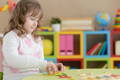
Using the Montessori Smart Board: Core Activity Types
This is where things get interesting. The same Montessori smart board can be used in a bunch of different ways, without changing anything, just by how your child interacts with it.
Exploring Shapes and Spatial Awareness
This usually happens first, naturally.
Kids pick up a shape, try to place it, realize it doesn’t fit, rotate it, try again… and then it clicks. That small “aha” moment is doing a lot of work.
They’re learning how shapes differ, how space works, and how to adjust when something isn’t right.
Over time, this builds visual discrimination (spotting differences) and a basic sense of geometry. It may look like simple play, but it’s actually early problem-solving in action.
Learning Numbers Through Hands-On Play
Numbers start making sense when kids can touch them.
With the board, they can count rings, match numbers to quantities, or even do simple things like “2 + 1” by physically adding pieces together.
This is how number sense develops. Also, hands-on interaction with objects helps children build stronger math foundations than abstract learning alone.
This is why tools like this are often grouped with Montessori math materials, where children learn numbers by actually using objects.
Sorting, Categorizing, and Logical Thinking
Give a child a pile of mixed pieces, and they’ll usually start sorting without being asked.
By color, by shape, by size, it’s instinctive.
This kind of play builds logical thinking. They’re creating order, noticing patterns, and grouping things based on shared traits. That’s the same thinking used later in math, science, and everyday decision-making.
And the nice part? It doesn’t feel like work at all.
Developing Fine Motor Skills and Coordination
The magnetic fishing game is more than just a fun extra. Picking up small pieces, aiming with the rod, placing items carefully… all of this builds hand-eye coordination and control.
This is why tools like this are often recommended as fine motor skills toys for early development.
According to the Cleveland Clinic, activities that involve grasping, placing, and coordinating movements play a key role in developing fine motor skills during early childhood.
Pattern Recognition and Early Problem-Solving
At some point, kids start making their own little systems.
Red, blue, red, blue. Big, small, big, small.
They might not explain it, but they’re building patterns. And patterns are a big deal, too. They’re the foundation of math, logic, and prediction.
Once they get comfortable, they’ll even start testing what comes next. That’s early problem-solving and predictive thinking showing up in a very simple way.

Independent Play and Exploration
Sometimes, the best thing you can do is… nothing.
No instructions, no setup, no “let’s do this now.” Just let them explore.
They’ll mix activities, create their own rules, and use the board in ways you didn’t expect. That’s exactly what you want.
This is where independence and creativity grow. In Montessori, the idea is simple: give the child the tool, and let them lead.
And honestly, that’s when the board becomes the most useful.
How to Guide Play Without Over-Teaching
This is the part most parents overthink.
You don’t need to turn this into a lesson. Just show your child once (slowly) and then let them take over.
That’s it.
They’ll repeat the same thing again and again. It might look like nothing is changing, but that repetition is where the learning sticks.
Try not to jump in too quickly. If something doesn’t fit or goes “wrong,” give them a second. Kids are surprisingly good at figuring things out when we don’t rush to fix it for them.
Mistakes are part of the process. Actually, they’re kind of the point.
Your role is simple: set it up, stay nearby, and let them explore. Think of yourself less like a teacher and more like… quiet background support.
They’ll do the rest.

How Activities Evolve with Age
One of the best things about a Montessori board like this is that it doesn’t get “old” after a few weeks. It grows with your child.
At age 3, it’s all about the basics: Sorting colors, matching shapes, stacking pieces, and simple counting. Everything is hands-on and focused on understanding how things work.
By age 4, you’ll start to see a shift: Kids begin creating patterns, noticing sequences, and trying small challenges on their own. They might line up pieces in a certain order or start combining counting with matching.
At age 5 and up, things get more interesting: Now they’re mixing activities, counting while sorting, building patterns while solving small problems. It becomes less about the pieces and more about how they use them.
Same board, different level. That’s what makes it stick around.
What Skills This Type of Play Supports
When you zoom out a bit, this kind of play is doing more than it looks.
All those small movements, picking up pieces, placing them, using the magnetic rod - help build fine motor skills. These are the same skills kids use later for writing, drawing, and everyday tasks. Hands-on activities like grasping and coordinating movements are key to motor development in early childhood.
Then there’s early math understanding. Counting, sorting, and recognizing patterns all build the foundation for numbers to actually make sense. According to the American Academy of Pediatrics, play-based learning supports cognitive development and helps children build these early thinking skills more effectively than passive learning.
You’ll also notice longer attention spans. Repeating tasks, trying again, and focusing on small details - all build concentration.
And of course, there’s problem-solving. Every time something doesn’t work, and your child adjusts, they’re learning how to think through challenges on their own.

Conclusion

Free Delivery
Over $80

Easy Returns
No questions asked

Unbeatable Warranty
1-year ++ warranty
 Secure CheckoutWorld’s most secure payment method