


20 Best Montessori First Birthday Gifts (Actually Used, Not Shelf-Parked)
The best Montessori first birthday gifts avoid that fate by matching what a one-year-old can actually do. They provide simple activities such as filling, pulling, stacking, sorting, and walking. Children can repeat these actions independently, which keeps the toy interesting after the wrapping paper has disappeared.
Our list includes 20 Montessori gifts for 1 year old children, organised by developmental stage. Whether you are a parent, grandparent, relative, or slightly confused family friend, you can quickly find a gift that suits the child.
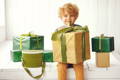
What Makes a Montessori Gift Actually Get Used?
Look for these qualities:
- Stage-appropriate challenge: One-year-olds often enjoy grasping, filling containers, pulling, posting, stacking, and standing. A toy that meets them at this stage is more likely to be used.
- One clear activity: Simple actions such as sorting a shape or stacking a ring encourage repetition without overwhelming the child.
- Room to grow: Open-ended toys and multi-stage activities can introduce new challenges as the child develops.
- Calm materials: Wood, plush fabric, and food-grade silicone offer useful sensory experiences without unnecessary lights or sounds.
- Safe construction: Check the recommended age, materials, finish, and size of every component.
The US Consumer Product Safety Commission also provides guidance on small parts in toys and children’s products. Always follow the manufacturer’s age and safety instructions.
A Quick Word on What a One-Year-Old Can Do
The American Academy of Pediatrics explains that children at this age begin using objects more purposefully while continuing to investigate them in different ways. Its 12-month developmental milestonesprovide a useful general reference.
Every child develops at a different pace. Readiness matters more than the number on the birthday card. Our guide to Montessori for 1-year-oldsoffers more activities for this stage.
Here is a quick starting point:
Child’s Current Stage
Suitable Gift Type
Good Options
Sitting and exploring
Soft sensory toys
Beehive, Soft Barn, Lion Stacker
Pulling up or walking
Movement toys
Roaring Roller, Balance Bike
Sorting and posting
Problem-solving toys
Sorting Tool, Sorting Cube, Shape Blocks
Ready for longer use
Open-ended toys
Rainbow, Building Blocks, Teepee Tent
The 20 Best Montessori First Birthday Gifts

For Babies Still Grasping, Sitting, and Exploring
Best for: Fill-and-empty play, focus, sensory discovery, and cause and effect.
Why it will not get shelf-parked: Filling and emptying creates a simple loop that children can repeat independently. Again and again. And then once more for quality control.
Best for: Sensory play, animal vocabulary, grasping, and fill-and-dump activities.
Why it will not get shelf-parked: The animals offer different textures and characters, while the barn supports the satisfying in-and-out activity babies love.
Best for: Grasping, hand-eye coordination, sensory exploration, stacking, and teething.
Why it will not get shelf-parked: Babies can first explore the individual textures before attempting to place the rings on the base. The challenge grows with their coordination.
Best for: Grip strength, focus, sensory play, cause and effect, and teething.
Why it will not get shelf-parked: It offers several simple activities and travels easily in a car, pushchair, or changing bag.
For Babies Finding Their Feet
Best for: Gross motor development, coordination, crawling, and early steps.
Why it will not get shelf-parked: Its purpose changes as the child becomes more mobile. First they reach and crawl towards it. Later, they pull it around like a very patient wooden pet.
Best for: Balance, gross motor skills, confidence, and independent movement.
Why it will not get shelf-parked: The child can use it beyond the first birthday as balance and leg strength improve.
For Curious Problem-Solvers
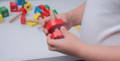
Best for: Fine motor skills, recognition, concentration, and problem-solving.
Why it will not get shelf-parked: Parents can change the activity when interest drops. It is six challenges without six different boxes taking over the floor.
Best for: Shape recognition, fine motor control, hand-eye coordination, and problem-solving.
Why it will not get shelf-parked: The match, post, retrieve, and repeat sequence gives children a clear activity with an immediate result.
Best for: Shape matching, grasping, fine motor control, and purposeful physical play.
Why it will not get shelf-parked: The task is easy to understand but takes practice to master. It also turns enthusiastic banging into something vaguely educational.
Best for: Matching, fine motor control, colour recognition, shape recognition, and early STEM play.
Why it will not get shelf-parked: Younger children can open and close the eggs. Older toddlers can begin matching their colours, shapes, and numbers.
Best for: Open-ended play, creativity, colour exploration, and spatial reasoning.
Why it will not get shelf-parked: It has no single correct use. The arches can become tunnels, bridges, fences, beds, or a questionable multi-storey home for toy animals.
Best for: Shape matching, stacking, spatial reasoning, and creativity.
Why it will not get shelf-parked: It combines a clear matching task with open-ended construction, so the play can change as the child develops.
Best for: Early puzzles, visual matching, fine motor control, and problem-solving.
Why it will not get shelf-parked: Children can begin by removing the pieces before learning how to place them back correctly.
Gifts That Grow With the Child
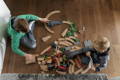
Best for: Cause and effect, concentration, fine motor control, and early STEM exploration.
Why it will not get shelf-parked: Babies can touch and turn the different features before returning to the activities with more control as toddlers.
Best for: Fine motor practice, independent discovery, concentration, and problem-solving.
Why it will not get shelf-parked: Its different challenges allow children to discover new ways to play as their abilities develop.
Best for: Walking, balance, fine motor skills, matching, and problem-solving.
Why it will not get shelf-parked: It offers two distinct ways to play. Children can pull it across the room or sit down and work with the shell pieces.
Best for: Fine motor control, pretend play, practical-life activities, and food vocabulary.
Why it will not get shelf-parked: Pretend cooking becomes more detailed throughout toddlerhood. Today, the vegetables get separated. Tomorrow, they become soup in a restaurant with no menu and terrible service.
Best for: Creativity, spatial reasoning, building, and sustained focus.
Why it will not get shelf-parked: The pieces can become castles, houses, towers, walls, roads, or anything else the child decides to build.
Best for: Books, independent play, quiet time, and imagination.
Why it will not get shelf-parked: It is a play space rather than a single activity. It can become a reading nook, shop, hideaway, or meeting room for stuffed animals with important business.
Best for: Anyone looking for a complete, gift-ready present.
Why it will not get shelf-parked: The toy supports movement from crawling to walking, while the guide helps parents introduce Montessori ideas throughout the home.
How to Choose From This List
- Baby is still sitting: Choose the Baby Beehive, Soft Barn, Lion Stacker, or Silicone Pulling Toy.
- Baby has started moving: Try the Roaring Roller, Balance Bike, or Pulling Snail.
- Baby loves figuring things out: Consider the 6-in-1 Sorting Tool, Sorting Cube, Shape Blocks, or Geometric Eggs.
- You want a toy that lasts: Look at the Rainbow, Building Blocks, Teepee Tent, or Learning Rocket.
- You are buying for someone else: The First Steps Bundle provides a gift for the child and a practical guide for the parents.
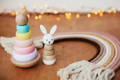
Are Wooden Montessori Toys Worth It?
However, wood alone does not make a toy educational. A wooden puzzle intended for an older child can gather dust just as efficiently as a plastic one.
When comparing the best Montessori toys for 1 year old children, consider:
- The recommended age
- The child’s current abilities
- The quality of the construction
- The size of the components
- Whether the activity offers room to grow
- How easily the toy can be cleaned
Conclusion
The strongest first birthday gifts Montessori families can choose are simple, safe, and matched to the child’s stage. They offer a clear activity while leaving enough room for repetition and discovery.
No matter what you choose, a soft barn, a sorting cube, a pulling snail, or a wooden rainbow, focus on what the child can use now. That is the gift most likely to leave the shelf and become part of everyday play.
Frequently Asked Questions
What Makes a Good Montessori First Birthday Gift?
What Can a One-Year-Old Actually Play With?
Many one-year-olds enjoy filling and emptying containers, stacking, posting, pulling, dropping, and exploring cause and effect. Movement toys may also suit children who are pulling up, cruising, or beginning to walk.
Are Wooden Montessori Toys Worth It for a First Birthday?
Wooden Montessori toys can be worth the cost when they are durable, safely made, and suitable for the child’s stage. Their value comes from repeated use and adaptable play, not from the material or Montessori label alone.
What Is a Good Montessori Gift if the Baby Is Not Walking Yet?
Soft fill-and-dump toys, textured stackers, grasping toys, and sensory activities work well for babies who are not walking. The Baby Beehive, Soft Barn, Little Lion Stacker, and Silicone Pulling Toy can all be used while sitting.
Do Montessori First Birthday Gifts Have to Be Expensive?
Montessori first birthday gifts do not have to be expensive. Developmental fit, safety, quality, and usefulness matter more than price. One appropriate toy can support more meaningful play than a pile of poorly matched presents.
How Many Gifts Does a One-Year-Old Need?

Free Delivery
Over $80

Easy Returns
No questions asked

Unbeatable Warranty
1-year ++ warranty
 Secure CheckoutWorld’s most secure payment method