


Montessori Practical Life Activities: 40+ Ideas by Age, From Baby to Age 6
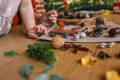
What Are Montessori Practical Life Activities?
What Are the Five Areas of Practical Life?
Care of Self
Care of the Environment
Control of Movement and Coordination
Grace and Courtesy

Why Montessori Practical Life Matters
Practical Life Activities by Age
Practical Life Activities for Babies
- Watch food preparation. Carry your baby in a secure wrap or place them safely nearby while you prepare food. Name your actions and ingredients. This builds familiarity with family routines and language.
- Smell herbs and spices. Hold a sprig of mint, basil, or another safe ingredient near your baby and let them explore the scent. This builds sensory awareness.
- Transfer large objects. Offer two containers and a few large, graspable objects to move between them. This builds hand-eye coordination and intentional release.
- Explore a grasping basket. Fill a basket with safe household objects that are too large to swallow, such as a wooden spoon, cloth, or silicone cup. This builds grasp strength and sensory exploration.
- Wipe a tray. Place your hand over your baby’s hand and guide a soft cloth across a tray. This introduces purposeful movement.
- Join handwashing. Support your baby securely while helping them place their hands under gently running water. This builds awareness of self-care routines.
- Carry a soft item. An older baby may carry a washcloth, sock, or small towel to a nearby basket. This builds coordination and participation.

Practical Life Activities for Toddlers
- Pour a small amount of water between two cups. This builds wrist control and concentration.
- Transfer large items with a spoon. Move large pasta shapes or soft pieces from one bowl to another under supervision. This builds hand-eye coordination.
- Wipe a surface. Provide a damp cloth for a low table or tray. This builds purposeful movement and responsibility.
- Put clothes in a basket. Ask your toddler to carry one item at a time. This builds coordination and familiarity with routines.
- Water a plant. Use a very small pitcher with only enough water for one plant. This builds control and care for the environment.
- Squeeze a sponge. Let your toddler soak and squeeze a sponge over a shallow bowl. This strengthens the hands.
- Carry a tray. Begin with an empty tray before adding one light object. This develops balance and control of movement.
- Unload safe kitchen items. A toddler can place wooden spoons, plastic containers, or cloths in a low cupboard. This builds sorting skills and contribution.
- Practise simple dressing. Pulling off socks, pushing arms through sleeves, or placing a hat on the head builds care-of-self skills.
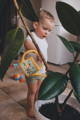
Practical Life Activities for 2-Year-Olds
At this age, children can often stay with a task for longer and complete two or three connected steps. They still need supervision, but they may reject assistance with impressive speed and volume.
- Pour a drink. Fill a small pitcher with only the amount needed for one cup. This builds control and judgement.
- Practise buttons and zips. Use loose clothing, a dressing frame, or a bag with a large zip. This builds finger strength and self-care.
- Spread soft food. Offer a blunt spreader for hummus, cream cheese, or another soft topping. This develops wrist control.
- Peel a banana. Start the peel for your child if needed, then let them finish. This builds bilateral coordination.
- Wash fruit or vegetables. Provide a bowl, water, and a small brush. This introduces an orderly work sequence.
- Wash a table. Show how to wet a sponge, scrub, and dry the surface. This builds coordination and concentration.
- Sweep a small area. Use a child-sized brush and dustpan for crumbs or dry leaves. This develops controlled movement.
- Set one place at the table. A placemat with simple outlines can show where the plate, cup, and utensils belong. This builds order and memory.
- Care for hands and nails. Children can use a nailbrush during handwashing and apply lotion with help. This supports care of self.
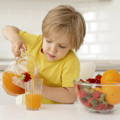
Practical Life Activities for 3-Year-Olds
- Make a sandwich. Let the child spread, add simple fillings, close, and cut it with a child-safe tool. This builds sequencing and coordination.
- Crack an egg. Demonstrate tapping and opening it over a separate bowl. Remove shell pieces together. This builds controlled force.
- Juice an orange. A manual juicer develops strength, coordination, and patience.
- Peel suitable produce. Use a child-safe peeler with close adult supervision and position the food securely. This builds hand control.
- Pour drinks for the table. Use a manageable pitcher and small cups. This combines movement, judgement, and courtesy.
- Sew or lace. Use a lacing card or a large, blunt needle with stiff fabric. This develops fine motor precision.
- Arrange flowers. Provide a small vase, trimmed flowers, and a cloth for spills. This builds care for the environment and visual order.
- Polish a safe object. A little cloth and suitable polish can be used on wood or another parent-approved surface. This builds circular hand movements and concentration.
- Fold cloths. Begin with napkins or square washcloths marked with a centre line. This supports order and bilateral coordination.
- Care for a plant or pet. Give one defined job, such as filling a pet’s water bowl with adult oversight. This builds responsibility and empathy.

Practical Life Activities for 4-Year-Olds
- Prepare a snack from start to finish. The child can wash, cut with an appropriate tool, serve, and clean the workspace. This builds planning and independence.
- Set and clear the table. Give the child responsibility for specific items. This develops memory, order, and contribution.
- Wash dishes. Begin with a few non-breakable items, warm water, and a stable work area. This builds sequencing and care of the environment.
- Sweep or mop. Child-sized equipment helps children move with control instead of wrestling a broom twice their height.
- Fold laundry. Start with washcloths, socks, and simple shirts. This develops coordination and visual matching.
- Master fastenings. Practise buttons, zips, buckles, and the early steps of tying. This supports independent dressing.
- Follow a visual recipe. Use pictures for two or three steps, such as adding yoghurt, fruit, and oats to a bowl. This builds sequencing.
- Care for plants. The child can check soil, water, remove dry leaves, and wipe the pot. This develops observation and responsibility.
- Manage a daily job. Feeding a pet, placing napkins on the table, or wiping the eating area gives the child a predictable family role.

Practical Life Activities for 5 and 6-Year-Olds
- Prepare part of a meal. A child can wash ingredients, measure, mix, serve, and help clean. This develops planning and coordination.
- Bake from a simple recipe. Reading pictures or measurements, following an order, and waiting for the result build concentration and patience.
- Practise advanced sewing. Sewing on a large button or making a small fabric pouch develops precision and persistence.
- Tie shoes. Break the process into consistent steps and allow plenty of repetition.
- Complete a cleaning routine. The child can clear a shelf, wipe it, sort the contents, and replace them neatly. This strengthens order and problem-solving.
- Organize personal belongings. A child can check their bag, place dirty clothes in a basket, and prepare needed items for the next day.
- Care for plants or pets. Older children can follow a simple schedule with adult oversight.
- Help a younger child. Showing a sibling where cloths belong or helping set out cups develops patience and grace and courtesy. Adults should still supervise rather than making the older child responsible for caregiving.
- Practise simple money skills. A pretend shop, family shopping list, or supervised purchase introduces counting and polite social exchanges.
- Manage personal cleanup. The child returns materials, handles small spills, and checks the work area after an activity.
How to Set Up a Montessori Practical Life Area at Home
Start With Child-Sized Tools
Use a Low Montessori Practical Life Shelf
Prepare the Wider Environment
- A stable step stool near the sink
- Low hooks for a coat, apron, or cleaning cloth
- A small towel within reach
- A low drawer for cups and utensils
- A basket for dirty cloths
- A clear place for the broom and dustpan
- A child-height surface for food preparation
Rotate Activities With Purpose
A Simple Starter Materials List
- Care of self: Hairbrush, small mirror, dressing frame, washcloth, low hook, and clothes basket.
- Care of the environment: Sponge, cloths, spray bottle with water, child broom, dustpan, plant mister, and small basin.
- Food preparation: Small pitcher, bowl, spoon, blunt spreader, chopping board, and child-safe food tool.
- Movement and coordination: Tray, basket, tongs, spoon, and containers for supervised transfer work.
How to Present a Practical Life Activity
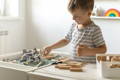
Practical Life Builds Capable Children, One Spill at a Time
Frequently Asked Questions
What Are Montessori Practical Life Activities?
What Are the Five Areas of Practical Life in Montessori?
The five areas are care of self, care of the environment, control of movement and coordination, grace and courtesy, and food preparation. Some Montessori programmes place food preparation within the other categories, but it is often treated separately at home.
At What Age Should Practical Life Activities Start?
Practical life can begin during a baby’s first year through observation, grasping, carrying safe items, and supported participation. The work becomes more complex as the child’s movement, attention, and independence develop.
Do I Need to Buy Montessori Materials for Practical Life?
No, most Montessori practical life activities use ordinary household items. Small cups, cloths, sponges, trays, baskets, and a child-sized broom are enough to begin.
What Is the Purpose of Practical Life Activities?
The purpose of practical life activities is to develop concentration, coordination, independence, and order while helping children contribute to daily life. These skills also prepare children for more complex Montessori work.
How Do I Set Up a Montessori Practical Life Shelf at Home?
Use a low shelf with four to six activities, placing each activity on a separate tray or in a basket with all its materials. Choose child-sized tools and rotate the selection when your child’s interest or ability changes.

Free Delivery
Over $80

Easy Returns
No questions asked

Unbeatable Warranty
1-year ++ warranty
 Secure CheckoutWorld’s most secure payment method