


Why Storytelling Toys Matter: The Quiet Lessons Inside Noah’s Ark
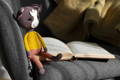
This quiet scene is more than adorable play. Some of the deepest early lessons about kindness, responsibility, language, and hope arrive through stories children can hold and act out.
Storytelling toys for toddlers turn children from listeners into active participants. Instead of simply hearing what happens, they decide who needs help, what comes next, and how the story ends. That process strengthens imagination while giving children a safe place to explore feelings and relationships.
The story of Noah’s Ark is particularly well suited to this kind of play. It contains animals to name and pair, events to sequence, characters to care for, and a powerful message about hope after difficulty.
Here, we will explore the developmental science behind storytelling play, the quiet lessons inside Noah’s Ark, and how parents can bring those lessons into everyday play without delivering a lecture to someone currently wearing one sock.
Why Is Storytelling Real Work for a Toddler’s Brain?
According to the Child Mind Institute, pretend play gives children opportunities to practise language, creativity, problem-solving, and social skills. A toy may appear simple, but the mental work happening around it is anything but.
When children act out a story, they practise several important abilities:
- Language and vocabulary: Naming animals, describing actions, and inventing dialogue introduce words in a meaningful context. “Animal” may become “two animals,” “sleepy animals,” or “animals hiding from the rain.”
- Sequencing: Stories have an order. The storm begins, the animals board, the ark sails, and the rainbow appears. Understanding what happens first, next, and last supports later reading comprehension.
- Cause and effect: Children begin to connect events. The animals enter because the storm is coming. Noah cares for them because they need protection.
- Empathy and perspective-taking: When children imagine how a character feels, they practise seeing an experience from another viewpoint.
- Emotional regulation: Pretend play allows children to explore worry, separation, courage, and relief from a safe distance.
- Symbolic thinking: A wooden figure is not a living animal, yet the child understands that it represents one. This ability to let one thing stand for another also supports language, reading, and early mathematical thinking.
This is why Montessori educators take play seriously. For young children, play is the work. For parents interested in the connection between stories and hands-on learning, Montessori toys and storytelling explore how simple materials can support imagination.
Our guide to emotional intelligence and Montessori toys also explains how thoughtful play can encourage empathy and emotional awareness.
Why Does Hands-On Storytelling Beat Screen-Fed Stories?
A screen delivers a finished narrative. The music swells, the characters move, and the plot continues whether the child is thinking about it or licking a cracker. A physical story set works differently. Nothing happens until the child makes it happen.
With imaginative play toys, children choose which character moves first, who speaks, and what happens next. They can repeat one scene 14 times, change the ending, or introduce a surprise guest from another toy basket. The ark may occasionally transport a wooden carrot. Creative directors can be difficult.
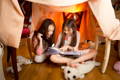
Hands-on play also fits naturally with Montessori principles. The materials are real and tactile. The child leads. There are no flashing lights demanding attention or buttons that perform the interesting part for them. That’s the idea behind Montessori toys.
Screens can tell beautiful stories, but children and screen time should work only when boundaries are set. However, wooden toys for storytelling give children something a screen cannot: control of the tale.
What Quiet Lessons Are Hidden Inside Noah’s Ark?
These lessons do not need a lengthy explanation. In fact, toddlers are rarely improved by a surprise seminar. The meaning comes naturally through play.
Caring for Every Creature
As children move the figures into the ark, they practise nurturing behaviour. They may check whether everyone is present, comfort an animal, or decide who should board first. These small acts make a Noah’s Ark playset one of those rare toys that teach empathy without announcing that an empathy lesson is now in session.
Finding Hope When Things Look Impossible
Faith-based families may present this as a lesson in trusting God during uncertainty. Secular families can explore the same events through resilience, patience, and hope. Both interpretations give children a reassuring pattern: there is trouble, people care for one another, and the trouble eventually ends.
Discovering the Rainbow After the Storm
Young children understand big ideas more easily when those ideas have something concrete attached to them. Hope is abstract. A rainbow arriving after the storm is something they can picture, name, and include in their retelling.
Looking After Others
The child must gather the animals, keep the pairs together, and help everyone reach safety. Nobody expects a toddler to manage an actual vessel full of animals, which is fortunate for the vessel, but pretend responsibility still matters.
The best lessons do not always feel like lessons. They arrive quietly while a child is deciding whether the last animal can squeeze through the door.
Is Noah’s Ark Just for Religious Families?
For Christian, Jewish, and other faith-based families connected to the story, faith-based toys for toddlers offer a gentle way to share beliefs and traditions. A child can listen to the story, handle its characters, and return to its message through play.
For secular families, Noah’s Ark works as a universal story about caring for living creatures and helping others through a difficult event. It also provides plenty of opportunities for animal naming, matching, counting, sequencing, and storytelling without requiring a religious lesson.

That flexibility is one reason a Noah’s Ark toy for toddlers can fit into many homes. Families can share the story honestly, in a way that reflects their own values, while leaving room for the child’s imagination.
What Makes a Good Storytelling Toy and Noah’s Ark Set?
Look for the following qualities:
- Real, tactile materials: Smooth wood, rounded edges, and child-safe finishes make pieces pleasant and comfortable to handle.
- Moveable, open-ended figures: Children should be able to pair, name, arrange, transport, and reimagine the characters rather than press a button and watch the toy perform.
- A story to anchor the play: An illustrated book gives the parent and child a shared starting point. Once the basic events are familiar, the child can take command of the plot.
- Room to grow: At age two, play may involve naming animals and finding pairs. Later, children can sequence events, invent dialogue, and create complete narratives.
- Practical storage: Story sets contain multiple figures, and multiple figures have a mysterious desire to migrate beneath furniture. Built-in storage helps keep the materials together and ready to use.
That balance is also what separates strong storytelling toys for toddlers from decorative keepsakes. A beautiful set is pleasant. A beautiful set children can actually use is better.
Meet the Montessori Wooden Noah’s Ark
The set includes one wooden ark, two wooden figures, wooden animal pairs, and a 20-page illustrated storybook. Parents can begin by reading the book with their child. The child can then load the animals, match the pairs, arrange the figures, and recreate the events in their own way.
Every piece is printed on both sides and has smooth, rounded edges without sharp corners. The removable cabin top provides easy access and gives the pieces a practical place to live after the final animal has boarded.
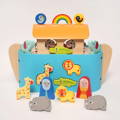
Just a quick look at the specs:
- Recommended age: 2+
- Contents: One wooden ark, two wooden figures, wooden animal pairs, and one 20-page storybook
- Materials: Eco-friendly wood and child-safe plastic
- Size: 13.4 x 5.7 x 7.9 inches
- Care: Wipe clean with a dry cloth
Is a Noah’s Ark Set a Meaningful Gift?
It can be given for a baptism, christening, baby dedication, birthday, Easter, Christmas, or another family celebration. For grandparents, godparents, and relatives, it offers more substance than a toy chosen simply because it makes a noise nobody can locate the off switch for.
The story carries themes that suit important occasions. The animals represent care and responsibility. The ark represents protection through difficulty. The rainbow represents hope, promise, and a new beginning.
That is a great deal of meaning to place inside one gift, even when the recipient initially seems most interested in putting every animal in a very serious line.
A well-made Noah’s Ark can also grow with the child. Early animal matching may develop into story retelling, role-play, counting, and elaborate imaginary adventures.
How Can Parents Bring the Story to Life at Home?
Start by reading the storybook together. Move slowly enough for the child to observe the pictures, name familiar animals, and notice the sequence of events. Once the story is familiar, place the figures within reach and step back.
Useful prompts include:
- “What happens next?”
- “Who needs help first?”
- “How do you think the animals feel?”
- “Can you find the matching pair?”
- “Where should everyone sleep?”
Name animals and actions naturally as you play. Words such as pair, board, sail, protect, storm, and rainbow become easier to understand when connected to visible actions.
Most importantly, do not correct the child’s version simply because it differs from the original. The storybook provides the foundation, but the child’s imagination provides the benefits of pretend play. If the ark becomes a veterinary clinic, a floating café, or temporary accommodation for several unrelated blocks, learning is still happening.

A Story They Can Hold
Noah’s Ark adds something more. Its story gives children a gentle way to explore caring for others, acting responsibly, and finding hope after a storm. Those ideas can carry religious meaning, universal meaning, or both.
A hands-on set makes those lessons concrete. The child does not simply hear that every creature matters. They gather the animals, find the pairs, and bring them to safety with their own two hands.
Some stories are worth passing down. One of the best ways to pass them down is to let children play them.
Frequently Asked Questions
What Are the Benefits of Storytelling Toys for Toddlers?
What Age Is a Noah’s Ark Toy For?
The Montessori Wooden Noah’s Ark is designed for children aged two and older. Younger toddlers can begin with animal naming and pairing, while older children can create longer and more detailed stories.
Is a Noah’s Ark Toy Only for Religious Families?
No, a Noah’s Ark toy can suit both religious and secular families. It can introduce a cherished faith story or support universal conversations about kindness, animal care, courage, responsibility, and hope.
How Does Pretend Play Build Empathy?
Pretend play builds empathy by encouraging children to imagine what different characters might feel, need, or experience. Caring for figures allows children to practise perspective-taking in a safe and manageable setting.
Why Choose a Hands-On Story Set Over a Storybook App?
A hands-on story set lets children control the characters, pace, choices, and outcome. Instead of watching a finished narrative, they actively build and repeat the story through movement, language, imagination, and decision-making.

Free Delivery
Over $80

Easy Returns
No questions asked

Unbeatable Warranty
1-year ++ warranty
 Secure CheckoutWorld’s most secure payment method